How should you store loose-leaf tea, and how long does it keep?
An opaque, airtight tin in a cool cupboard, well away from the spice rack. The fridge is not your friend.
Keep loose-leaf tea in an airtight, opaque container, in a cool, dark cupboard, away from anything with a strong smell. That covers almost all of it. Most black tea stored this way stays pleasant for a long time, while green tea is best drunk within months.
A researcher at Tufts University sums up the science in one line: the compounds in tea react with oxygen and moisture, and respond to changes in light and temperature. So the cupboard you choose matters almost as much as the tin.
Why a good tin beats a pretty jar
Dry leaf has four enemies, and each one explains a piece of the advice above.
Air. Finished tea keeps on oxidising slowly. Red Blossom Tea Company, a specialist American merchant whose storage notes we found useful, points out that a nearly empty canister is a problem as well, since the air trapped inside does the same job. Decant the last few spoonfuls into something smaller.
Light. The same merchant recommends metal or ceramic containers over clear glass or plastic. Light fades aroma and can warm the leaf. A glass jar on an open shelf looks lovely for about a month.
Heat. The shelf above the kettle or beside the oven is the most convenient place in the kitchen and the worst. Warmth speeds up staling.
Damp and smells. Tea readily takes on moisture and the odours around it. Keep it well clear of the spice rack and the coffee. Scoop with a dry spoon, and do not pour the kettle directly above an open caddy.
Choosing a container
| Container | Our view |
|---|---|
| Metal tin with a tight inner lid | The best everyday choice. Blocks light, and a double lid seals well. |
| Glazed ceramic with a sealing lid | Good, provided the seal is good. Many decorative jars have loose lids. |
| Resealable foil pouch | Fine, and often what the tea arrived in. Press the air out before sealing. |
| Clear glass jar | Only inside a dark cupboard. Never on a sunny shelf. |
| Wooden box or old biscuit tin | A wooden box can give the tea its own scent, and a used tin may smell of whatever it held before. Line it or keep the tea in its pouch. |
Keep one tea to each tin, and label it with the name and the date you opened it. Scented teas such as Earl Grey or jasmine are especially persuasive neighbours, so a tin that has held one is best kept for that tea from then on.
Fridge or freezer?
For most people, neither. Air inside the container can condense as it cools, which brings in the moisture you were trying to avoid, and Red Blossom advises against it for that reason. A fridge also holds plenty of smells. Some enthusiasts do keep a sealed, unopened pack of delicate green tea in the cold, and it can work so long as the pack is not opened until it has come fully back to room temperature. For an everyday tin in everyday use, stick to the cupboard.
How long does it keep?
There is no single date, because it depends on the tea. Green tea is the most perishable. The Tufts piece reports that the main catechin in green tea, a group of compounds found in fresh leaf, fell by 28 per cent over six months in home-like storage, and that the second most abundant fell by 51 per cent. Those are chemical measures and not a taste test, but they fit what most green tea drinkers notice. Buy it in small amounts and finish it within a few months of opening.
Black tea is sturdier. The UKTIA notes that the more oxidised leaf kept better on long journeys than green. Oolong sits between the two, depending on how far it has been oxidised and roasted. Pu Erh is the exception that sets out to age, and some drinkers value older cakes for their earthy flavours. Leaf size also counts. Small particles expose more surface and lose their aroma faster than whole leaves, one reason to buy loose in the first place.
What does the date on the packet mean?
Dried foods carry a best before date, and government guidance on food labels explains that this concerns quality. After it, food is usually safe but may not be at its best. You are allowed to use your senses to decide. So old tea is mostly a question of whether it is still worth drinking, unless it has been wet.
Here is how we judge a forgotten tin:
- Smell the dry leaf. Good tea has a distinct scent. Very little scent, or a smell of cardboard, means it has faded.
- Brew a small cup. Flat and dusty is a sign of staleness, and it will not harm you, but you may prefer to buy something fresher.
- Throw it out if it has been damp. Clumps, a musty smell or anything resembling mould mean it goes in the bin or on the compost.

Why we still call them caddies
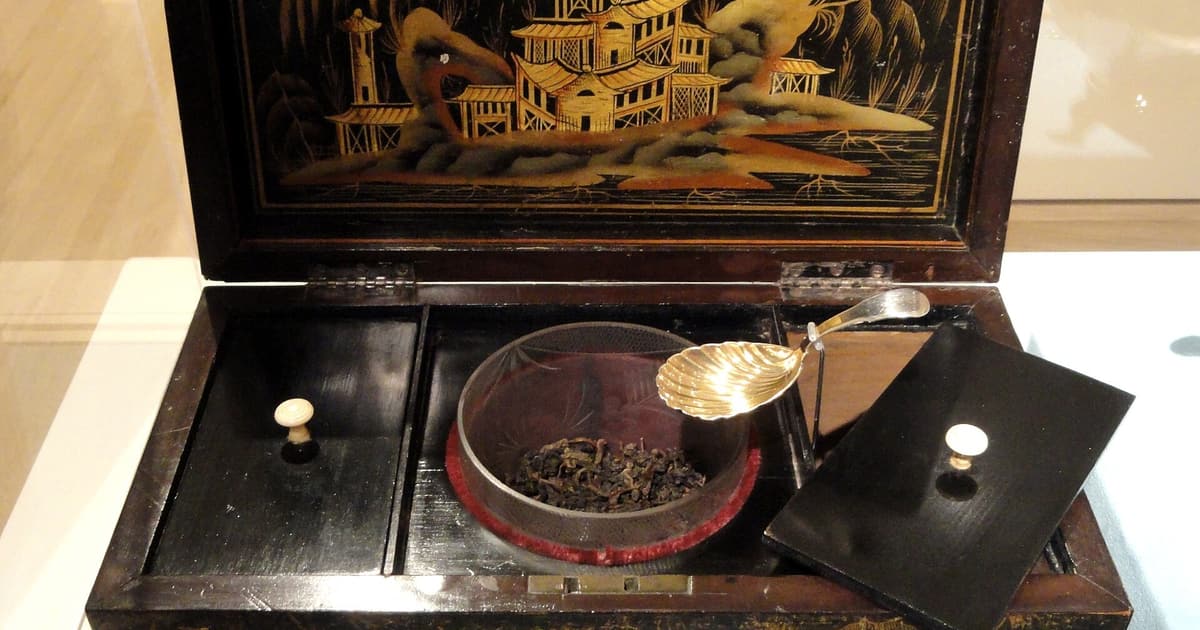
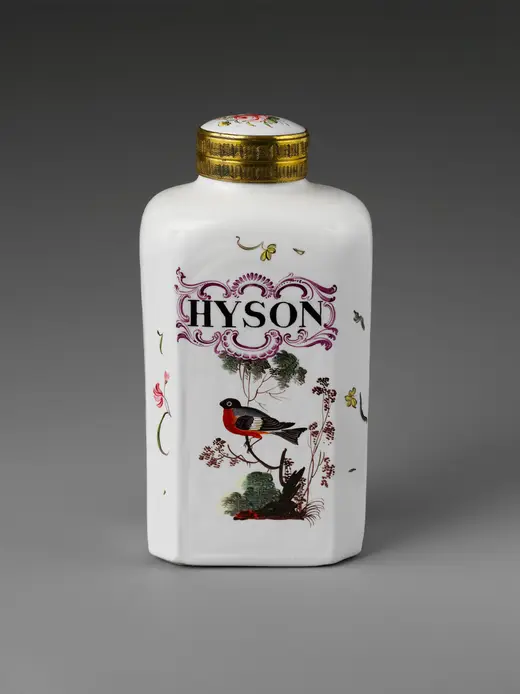
Storing tea used to be a matter of security as well as freshness. The UKTIA traces the word to kati, a measure of roughly a pound and a third that entered English in the late 18th century. Earlier tea chests had separate compartments for different teas, and sometimes sugar, and they could be locked. Tea was expensive enough that the lady of the house held the keys and the box stayed in the drawing room, out of reach of the servants.
The lock has gone from the modern version, but the principle has lasted well. A closed box, kept somewhere sensible, with a small quantity taken out at a time.
Once your tea is safely stored, the next question is how to get the best from it. Our guide to brewing times has the numbers, and if you are not sure what you have bought, start with the differences between tea types.