Black, green, oolong, white: what makes them different?
One plant, and a good deal of kitchen work. Oxidation decides most of what ends up in your cup.
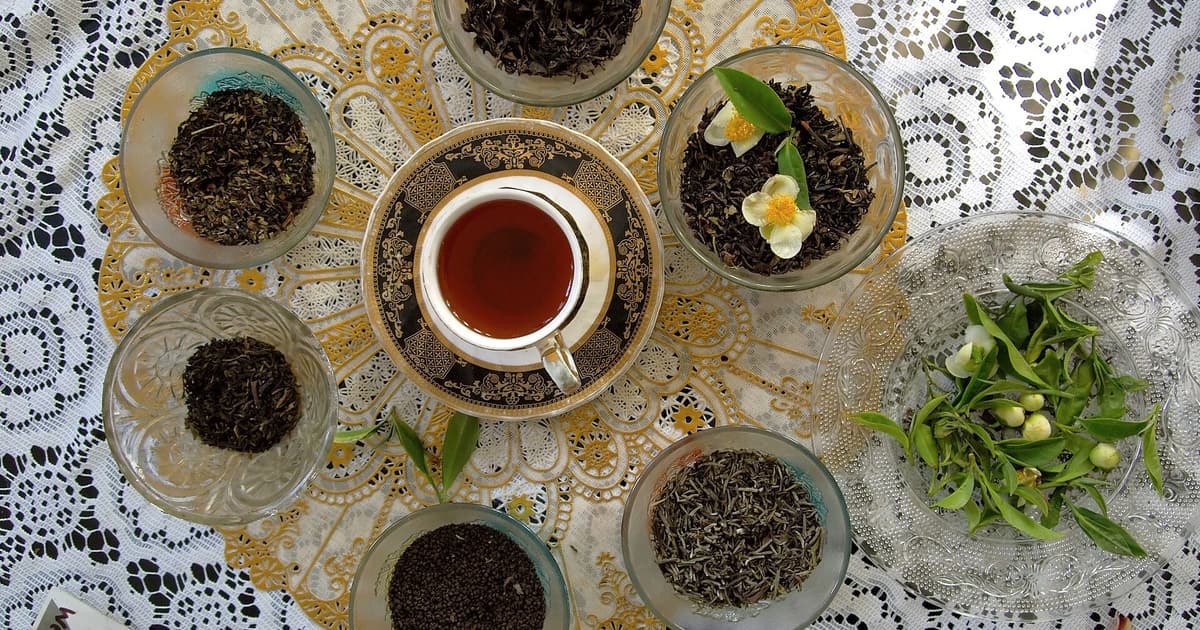
All true tea comes from one plant, Camellia sinensis. Black, green, oolong and white tea differ mainly in what is done to the leaf after picking, and above all in how far it is allowed to oxidise. The UK Tea and Infusions Association describes that oxidation step as the thing responsible for their distinct flavours.
So when you stand in front of a row of caddies, you are mostly looking at a row of decisions. The bush, the climate and the picking matter a great deal as well, but they will not turn a green tea into a black one. Handling will.
What oxidation does to a leaf
Once a tea leaf is bruised, enzymes inside it start to work. According to a processing guide from the Institute of Food Technologists, they break down chlorophyll and release tannins that then oxidise, and this changes the colour, the flavour and the look of the leaf. If you have watched a cut apple turn brown on a plate, you have seen a similar kind of reaction at home.
The tea maker's main control is heat. A burst of it, usually called fixing or "kill green", denatures the enzymes and stops the change at whatever point the maker wants. Stop it almost at once and you have a green tea. Let it run its course and you have a black one.
Figures from the Institute of Food Technologists guide linked above. Treat the percentages as a rough map. Makers do not stop a batch at a measured number, and published figures for oolong vary.
The route each tea takes
White
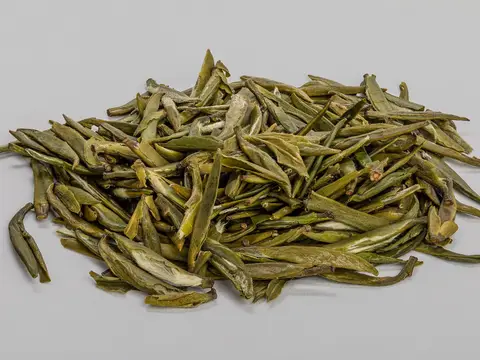
The simplest of the lot. Young buds and baby leaves are gathered and dried, often in the sun, says the UKTIA. The two best-known styles are Yin Zhen (Silver Needles), made only from new buds, and Pai Mu Tan (White Peony), which adds a few very young leaves. The Food Technologists' guide calls white tea unoxidised and dried gently over a long period, though you will find other writers who allow it a slight oxidation from the slow wither.
Green
Green tea is heated early so that oxidation never gets going. Japanese makers typically steam the leaf, while Chinese makers have traditionally used a hot pan or wok. Rolling comes next, and that is where you get twists, curves and pellets. Finally the leaf is dried until only 2 to 3 per cent of its water is left.
Oolong
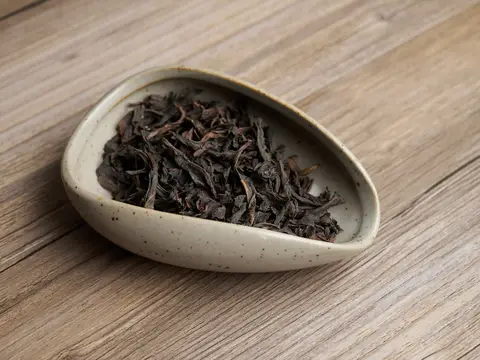
Oolong is the broad middle, and the reason it is so hard to describe in a sentence. The leaf is wilted, bruised and allowed to oxidise partly before being fixed. A lightly oxidised oolong can sit closer to a green tea in the cup, and a heavily oxidised one closer to a black.
Black
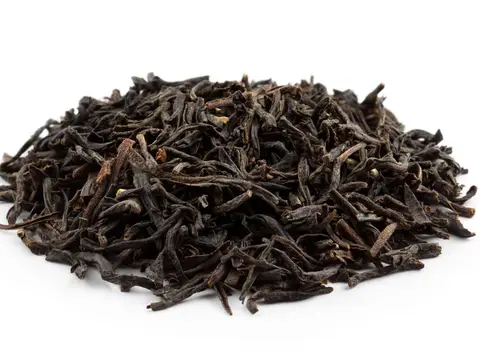
Black tea is withered, rolled or cut to break open the cells, then left in cool, damp air until it is fully oxidised, and dried. It is the only one of the four that skips the fixing step. Two kinds of rolling matter here. Orthodox rolling keeps the leaf largely whole, while CTC (cut, tear, curl) machines chop it small. Small broken pieces are what you find in many tea bags, while loose-leaf buyers mostly meet the orthodox kind. Our guide to brewing times gives the starting points for each of these styles.



Dark and yellow, the two you see less often
Dark teas are a family of their own, and Pu Erh from Yunnan is the best known. The UKTIA explains that there are two routes. Raw or sheng tea is left to age slowly and develops its earthy character over years. Ripe or shou tea is piled damp and covered so that it ferments in a matter of weeks. Both may be pressed into cakes or other shapes. Unlike the other teas here, dark tea is one you can reasonably keep for a long time.
Yellow tea is rare. The UKTIA cites an estimate that it accounts for well under 1 per cent of China's production, and you are unlikely to find it outside a specialist's list.
Where do Assam, Darjeeling and Earl Grey fit?
Those names answer a different question. Assam, Darjeeling, Ceylon and Kenyan tell you where a tea was grown. English Breakfast is a blend, and Earl Grey is a flavoured tea, and both are normally built on black leaf. A shop shelf labelled "Darjeeling" is therefore not a fifth colour of tea.
This is where the plant itself comes back in. The UKTIA counts about 1,500 cultivars, and it compares tea to wine in the way elevation, soil, wind and temperature shape the result. That is why two black teas can seem barely related. It also explains a piece of trade history: more oxidised black tea held its freshness better on long journeys than green, which helped it travel the world.
Is herbal tea really tea?
Not in the botanical sense. A peppermint or rooibos "tea" contains no Camellia sinensis at all, and the trade calls these infusions. The practical result is that caffeine was not detected in the herbal teas tested in one published analysis, while true teas of every colour contained it. We go through the numbers in our piece on caffeine in tea.
Could you grow it in Britain?
You could, and that is a good way of understanding all of the above. The Royal Horticultural Society says the plant is easily grown in a pot, prefers acid or at least lime-free soil, and is grown commercially in several UK sites including Tregothnan in Cornwall. A grower quoted in the RHS article says it can tolerate temperatures down to -10C, though the same piece suggests a cold greenhouse or a south-west facing wall in colder areas.
The RHS even gives a home method for green tea: pluck two leaves and a bud, steam them for a minute or two, rinse them in cold water to halt oxidation, then roll and dry. Skip the steaming and leave bruised leaves to darken instead, and you are heading in the direction of black. It is an instructive afternoon, whatever the tea tastes like.