Why does tea taste different in hard water?
If your cup grows a skin and tastes flat, blame the tap before you blame the tea.
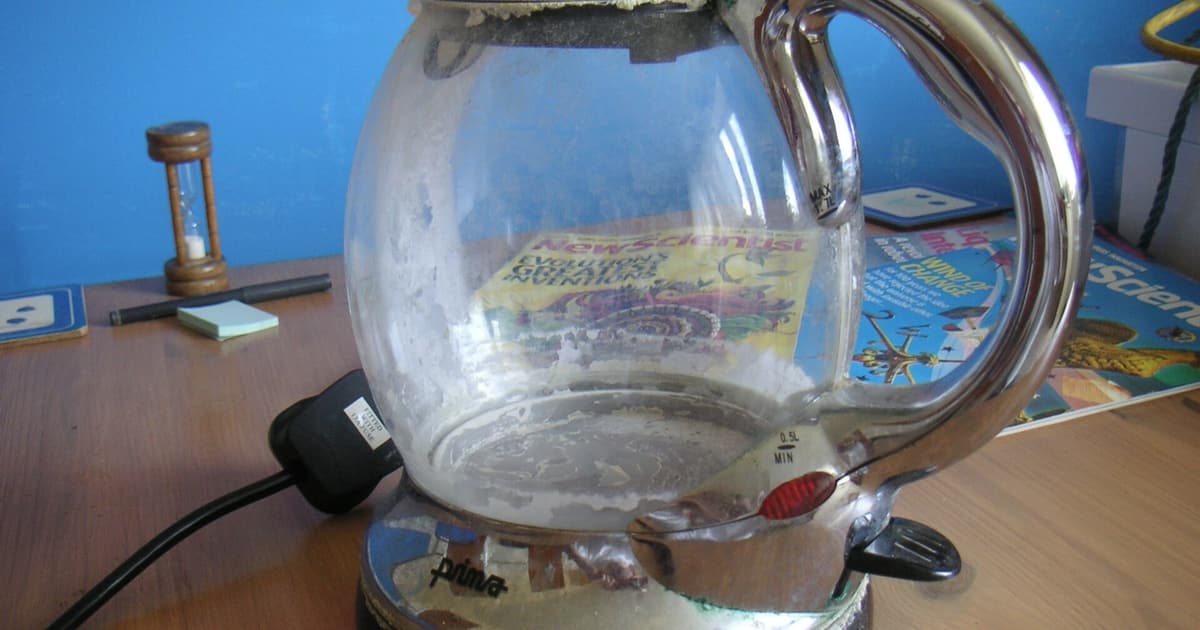
Tea tastes different in hard water because the calcium and other minerals in it react with compounds in the brew. The visible result is a thin, cloudy film on the surface. The result you can taste is usually a duller, flatter cup. If you have ever been pleased with a tea at a friend's house in another part of the country, then disappointed by the same tea at home, this is the likeliest explanation.
It is entirely a matter of quality. Scotland's Drinking Water Quality Regulator says the slight scum that hardness can leave on hot drinks is completely harmless.
What hard water is, and who has it
Rain picks up minerals on its way through the ground. Passing through chalk or limestone, it dissolves calcium and magnesium, and that is what makes water hard. Where supplies come from upland reservoirs, water has less chance to pick anything up.
That is why hardness has a geography. Chalk and limestone are uncommon in Scotland, so most Scottish water is classed as soft, says the DWQR. United Utilities reports that the majority of water in its North West region is soft or very soft, for much the same reason. Areas on chalk and limestone are another story, as anybody who has descaled a kettle in one will tell you.
There are no legal limits for hardness in drinking water, and no standard definition of hard or soft. The scale below is the one United Utilities gives as an indication.
| Description | mg/l calcium carbonate | Clark degrees |
|---|---|---|
| Very soft | Under 75 | Under 5.3 |
| Soft | 75 to 125 | 5.3 to 8.8 |
| Moderately hard | 125 to 250 | 8.8 to 17.5 |
| Hard | 250 to 375 | 17.5 to 26.3 |
| Very hard | Over 375 | Over 26.3 |
To find your own figure, start with your water company, since many offer a postcode checker. If you are not sure who supplies you, the Drinking Water Inspectorate has a tool for finding your local water company.
What is that film on my tea?
For a long time people blamed wax from the leaf. Research described in a 2021 summary of work at ETH Zurich says that studies in the 1990s disproved this, and that calcium carbonate is the biggest contributor to the compounds that form the film. The researchers measured how strong it was with an instrument placed on the surface of the tea. Water hardness, acidity, sugar or milk, tea concentration and brewing temperature all affected the result.
A simplified drawing. The colour difference between real cups depends on the tea and the water.
Is softer always better?
Not all the way down. The same researchers point out that perfectly pure water would form no film at all, but the tea would taste quite bitter. So the minerals do some useful work, and "hard water ruins tea" is too simple. Very hard water and completely pure water are the two ends to avoid.
The advice from the Royal Society of Chemistry's tea recipe is firmer. Its author, Dr Andrew Stapley of Loughborough University, recommends soft water, suggests filtering in hard areas, and also warns against bottled mineral water, for the same reason.
Does it matter which tea you drink?
It does, and this is the part that surprises people. A strong black blend with milk has plenty of body to carry a little dullness, and many drinkers in hard water areas never notice anything wrong with it. A pale green tea or a Darjeeling drunk without milk has nowhere to hide, so that is where hard water tends to show first. If you have moved house and a favourite delicate tea has stopped tasting right, try the test below before you blame the supplier.
A kitchen test you can do tonight
Advice on water only means something when you can taste the difference, so try this with a tea you know well.
- Fill a clean kettle with fresh tap water and boil it. Fill a second container with water that has passed through a jug filter, or use a friend's tap in a softer area, and boil that separately.
- Weigh the same amount of leaf into two warmed cups or small pots.
- Pour, and steep both for the same time, using our brewing dials as a guide.
- Look at the surface after a few minutes, then taste them without milk.
If the two cups taste alike to you, you can stop worrying about any of this and save the money on filters.
What you can actually do about it
- Try a jug filter. United Utilities lists jug-type filters as one way of softening water. The UKTIA also recommends fresh, filtered water. Change the cartridge on time, as the manufacturer directs.
- Keep the kettle clean. Descaling will not change the water, but it stops old flakes of scale ending up in the pot.
- Use a little lemon. The ETH researchers found acidity weakens the film, and the citrus adds flavour. It suits some black teas well, though not with milk.
- Do not use softened water from a whole-house softener. United Utilities notes that medical experts recommend keeping a non-softened supply for drinking, because softened water may contain high levels of sodium. If you have a softener, keep a separate tap for drinking and for the kettle.
If a tea seems wrong even with decent water, the leaf itself may be past its best. Our note on storing tea explains how to tell. The style of tea can matter too, because delicate greens and whites have much less flavour to hide behind than a robust black tea.